
Selling products or services to Dunkin’ franchise owners can be highly profitable for vendors who understand the structure of the franchise system.
Unlike independent coffee shops, Dunkin’ restaurants operate within a corporate franchise framework that standardizes branding, operations, and product offerings. However, franchise operators still control many purchasing decisions that affect daily operations.
For vendors offering services such as:
- Merchant processing
- Insurance products
- Payroll & HR systems
- Restaurant technology
- Facility maintenance
- Marketing services
- Equipment or consulting
Dunkin’ franchise operators represent a large and scalable B2B market opportunity.
To succeed, vendors must understand how the Dunkin’ franchise ownership ecosystem works.
Understanding the Dunkin’ Franchise Model
Dunkin’ operates primarily through franchised locations in the United States. While the brand sets strict operational standards, individual franchisees are responsible for running their restaurants.
Typical characteristics of the system include:
- Multi‑unit franchise ownership
- Regional franchise groups
- Strong brand compliance requirements
- Approved supplier programs for certain products
Because of this structure, vendors must determine whether their service:
1️⃣ Requires corporate approval
2️⃣ Can be sold directly to franchise operators
Many services — especially operational support services — fall into the second category.
Why Dunkin’ Franchisees Are Valuable Vendor Targets
Large Nationwide Network
Dunkin’ operates thousands of locations across the United States, particularly concentrated in the Northeast and major metropolitan areas.
This creates a large and identifiable operator base for vendors.
Multi‑Unit Ownership
Many Dunkin’ franchise operators own multiple stores.
Typical ownership structures include:
- 2–5 stores
- 10–25 stores
- Large regional portfolios
For vendors, this means that one successful sale can lead to multiple locations becoming customers.
Standardized Operations
Franchise systems allow vendors to develop repeatable solutions that can be deployed across many locations.
For example:
- POS integrations
- payroll platforms
- insurance coverage
- marketing automation
Once adopted by one operator, the solution can easily scale.
Identifying High‑Value Dunkin’ Franchise Operators
Not every franchise owner represents the same opportunity.
Small Operators
Smaller franchisees may own one or two locations.
Advantages:
- Faster decision-making
- Easier personal relationships
Limitations:
- Smaller budgets
- Limited expansion potential
Multi‑Unit Operators
Many Dunkin’ franchisees manage large restaurant portfolios.
Advantages for vendors:
- Larger contracts
- Centralized purchasing
- Easier onboarding across multiple locations
Because of this, many vendor outreach campaigns prioritize multi‑unit operators.
Using Franchisee Data to Target Dunkin’ Owners
The most effective outreach campaigns start with accurate franchise ownership data.
A Dunkin’ franchisee list allows vendors to segment operators by:
- State
- City
- Operator name
- Corporate ownership entity
- Store count
- Regional clusters
Targeting campaigns using structured data dramatically improves outreach efficiency.
Best Outreach Channels for Dunkin’ Franchise Owners
Email Marketing
Email works well for:
- SaaS companies
- payroll services
- restaurant technology vendors
Best practices include:
- clear value proposition
- short subject lines
- restaurant‑specific messaging
Cold Calling
Restaurant operators are often accessible by phone outside peak hours.
Recommended calling windows:
- 9:30–11:00 AM
- 2:00–4:00 PM
Avoid breakfast rush hours when coffee shops are busiest.
Direct Mail
Many restaurant operators still respond well to direct mail.
Examples include:
- vendor introduction letters
- industry case studies
- cost‑reduction reports
Because operators receive large volumes of digital outreach, physical mail often stands out more.
LinkedIn Outreach
Many Dunkin’ franchise executives maintain LinkedIn profiles.
Short, personalized introductions typically outperform aggressive sales messaging.
Messaging That Resonates With Franchise Operators
Restaurant operators prioritize solutions that address four core concerns:
1️⃣ Cost reduction
2️⃣ Revenue growth
3️⃣ Operational efficiency
4️⃣ Risk reduction
Example outreach positioning:
“We help multi‑location coffee and quick‑service restaurant operators reduce payment processing costs across their entire portfolio.”
Portfolio‑focused messaging tends to perform better than single‑store messaging.
Looking to connect with Dunkin’ franchise owners?
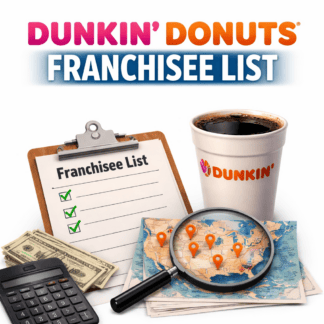
Access our Dunkin’ Franchisee List, which includes ownership data designed to help vendors identify restaurant operators across the United States.
FAQ
Can vendors sell directly to Dunkin’ franchisees?
Yes. Many service categories such as insurance, marketing, payroll, and technology solutions can be sold directly to franchise operators.
Are Dunkin’ locations independently owned?
Many Dunkin’ restaurants are operated by franchisees rather than corporate ownership.